
How to Watch: “Cyrus”

by Robert Sims, Special to MovieKit.com
Step 1: Bone up on your Duplass Brothers. Watching The Puffy Chair, Baghead and Humpday will prime you for the first studio offering from mumblecore pioneers Jay and Mark Duplass if you are unfamiliar with their amusing dissections of relationships at their most intimate and awkward.

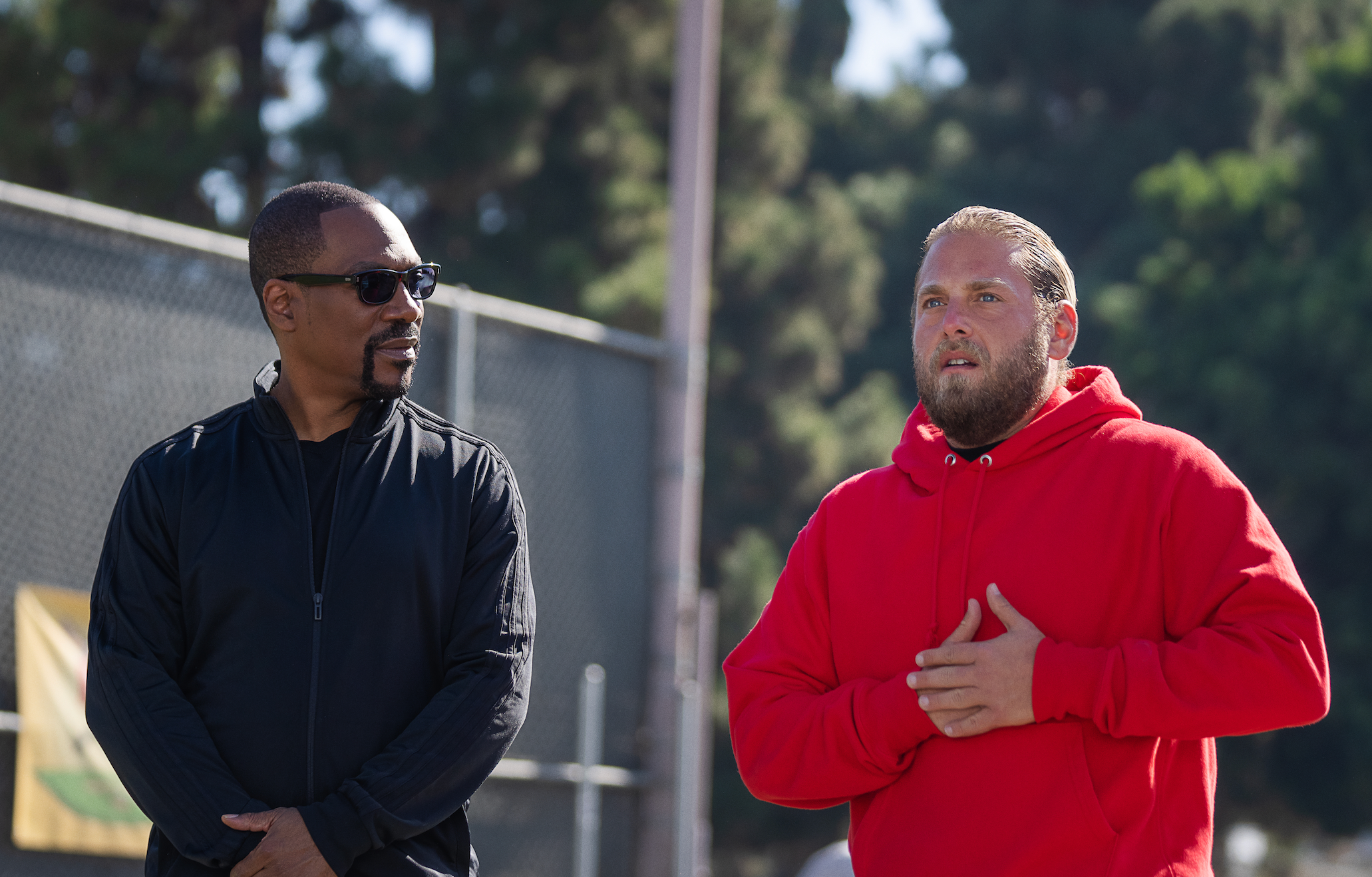
Step 2: Don’t worry if you hate the no-bucks, naturalistic aesthetic of mumblecore. Cyrus may unfold as a typical Duplass Brothers’ study in white middle-class American angst, but this time they’re working with a decent budget and a cast that features many familiar faces (John C. Reilly, Marisa Tomei, Jonah Hill, and Catherine Keener). You certainly can’t accuse the Duplass Brothers of selling out just because they are working with Hollywood money, but do walk away from Cyrus with the sense that the Duplass Brothers are trying to mature as both filmmakers and storytellers. There’s nothing silly or inane driving the search for emotional truth, such as a serial killer on the loose or a challenge involving on-camera gay sex.

Step 3: Open your ears and listen. There isn’t a wasted word in Cyrus. Every conversation between the divorced Reilly and his new girlfriend, single mom Tomei, represents small but significant strides to make a long and lasting personal connection with another damage soul. While Reilly and Tomei engage in open and honest dialogue, you need to read between the lines whenever her man-childish adult son Hill chimes in. As Cyrus, Hill’s not too thrilled at the idea of his mom dating Reilly. While there’s nothing inappropriate about Hill’s feelings for his mom, it’s clear that Tomei never wanted to cut the umbilical cord between mother and son. Pretending to be receptive to Reilly’s presence, Hill works overtime to ruin this burgeoning romance out of the fear that he will lose his mother’s love. Things turn nasty, allowing the Duplass Brothers to put some delightfully vicious words in the mouths of the men fighting for Tomei’s affections.

Step 4: Expect the unexpected from a Superbad boy. The self-deprecating Hill’s usually employed by Judd Apatow to generate big laughs, but he rarely receives an opportunity to stretch as an actor. That might change following Cyrus. Hill seems quite comfortable assuming the role of a master manipulator unable to express his feelings in a sincere and constructive way. But Reilly gives as good as he gets. You know that “lost puppy dog” look Reilly wears? It works to his advantage in Cyrus — it helps us to feel great empathy for a man who’s desperate love, going to find himself at war with a live-at-home musician suffering from a severe case of arrested development. Throughout all this, though, Tomei maintains her poise and dignity. It’s a matter of time before Tomei gets hurt, and it’s painful to watch her choose between her son and a man who could possibly come to love.

Level of difficulty in watching Cyrus: The Duplass Brothers demand your undivided attention. Thanks to their sincere way with words and experience with examining distressed relationships, you will gladly give it to them.

How to Watch: “The Karate Kid”

Step 1: Believe. As eye-rolling and skeptical as I was when I heard they were remaking The Karate Kid, I have to admit the film does a nice job re-envisioning the ’80s cult classic, thanks in large part to the new Kid, Jaden Smith.

Step 2: Don’t change it too much. The best part of this new Karate Kid is how it switches things up yet at the same time keeps to the heart and soul of the original. Jaden plays Dre, whose single mother (Taraji P. Henson) moves him from Detroit to China for work. From there, the story elements are basically the same — Dre meets a cute girl, rubs the local bullies the wrong way, gets his ass kicked by their kung-fu moves, befriends the apartment maintenance man, Mr. Han (Jackie Chan), who teaches him karate, so Dre can prove himself and also learn some life lessons, and so on. It’s formulaic and a little long-winded, but the pay off is still worth it.

Step 3: Recognize talent, Part I. The young Jaden honestly has talent, pure and simple. Sure, he was so damn cute as a 5-year-old in his debut Pursuit of Happyness performance, playing opposite his famous movie star dad Will Smith, but even then you could tell the kid inherited the acting genes. Jaden has such a natural ease that every step he takes seems genuine. And man, can that kid work up those tears; it rips your heart out. I’m pretty sure another star is born, one that might even surpass his dad’s fame. Can’t wait to see what kind of heartthrob he’ll be when he grows up.

Step 4: Recognize talent, Part II: Chan, too, surprises you in Karate Kid. Of course, casting him in the iconic Mr. Miyagi role seems like a no brainer, and goes one better with Chan’s expert martial arts moves. I swear, watching Chan do what he does the very best is like watching Fred Astaire dance, using everything around him to help in the fight. Unfortunately, he is in more teacher mode than kung-fu mode in Kid, but he does get in one good scene. The surprising part is how far Chan digs in for the role, playing a man who has had a tragic past. He and Jaden have a nice rapport that goes a long way in the film. Henson and the rest of the supporting cast hold up, but the film belongs to these two.

Step 5: Use montages. Speaking of marital arts, the montage training scenes are just as much fun as the original, and Jaden also shows an amazing amount of skill and agility. Filming the entire movie in Beijing also lends itself to more authenticity, with gorgeous locales, lush mountain tops and the always spectacular Forbidden City. The film does tend to drag a bit at two and half hours, but all in all, it does the original proud — and then some.

Level of difficulty in watching The Karate Kid: Not too bad. I wouldn’t be surprised if  a few more Karate Kids were in the works as we speak.

How the “Takers” Trailer Takes

Takers looks dangerously to Heat, but maybe not as good. And Zoe Saldana and Idris Elba are beginning to pigeon-hole themselves with this and The Losers. Hmmmm …

How to Watch: “Get Him to the Greek”

Step 1: Get yourself to see the Greek. It’s a raunchy, tasteless, hilarious — and surprisingly poignant (at times) — spin on the washed-up, pampered rock star motif.

Step 2: Follow the formula, but change it up. Russell Brand reprises his Forgetting Sarah Marshall role as British rocker Aldous Snow, who is still outspoken, randy, spoiled, wasted, unruly, yet occasionally talented — and having a career crisis after his last album crashes and burns. Enter Aaron Green (Jonah Hill), a lackey working for Snow’s record label, who is also one of his bigger fans. Green convinces his narcissistic boss (Sean Combs) to put on a live concert in L.A. with Snow headlining and is sent off to London to make sure Snow arrives on time. And so the insanity begins …

Step 3: Hire a hilarious cast. What sets Greek apart are Brand and Hill’s performances, especially Brand, who actually shows some chops. His Snow is only a caricature in Marshall, but here, the character is more fleshed out. It’s obvious Snow has some serious issues, substance abuse and otherwise, but he also feels like he let the love of his life go, he cherishes his son and just wants to please his wayward musician dad. Snow realizes he need to do some soul searching before he can turn a new leaf. And Hill’s bookish Green is just the guy to help him do it.

Step 4: Don’t stand out, so then you do. I’m now convinced Hill is those comic actors who isn’t necessarily in it to be the star attraction, say like Jim Carrey or Adam Sandler; he’s a team player, and basically has chemistry with whoever he’s starring opposite with, be it Michael Cera, Seth Rogen and now, Russell Brand. Hill should stand the test of time. The other stand out is Combs as the wacky record producer. One wonders how much of Diddy’s own producing style is represented, but the one crazy drug scene in Greek, when they are all in Vegas, will probably be revered as a classic. Two words: “Furry walls.”

Step 5: Get crazy. Writer/director Nicholas Stoller and producer Jason Segal, the masterminds behind Forgetting Sarah Marshall, mix their particular brand of humor to great success once again. It’s not like they are trying to reinvent the wheel with Greek, but they do take a few different spins with the genre, which keeps it fresh. Stoller’s skillful hand at getting the right performances certainly helps, plus the montages are the freakin’ hilarious, as far as montages go. Sometimes they are staid plot devices, but they totally work with the film.

Level of difficulty in watching Get Him to the Greek: Pretty easy. All in all, Get Him to Greek is a somewhat expected but also surprisingly competent summer comedy.

How to Watch: “Prince of Persia”

Step 1: Just go with the flow. Prince of Persia is the sort of popcorn-eating, mindless actioner you’d expect for the summer, made only slightly more appealing by Jake Gyllenhaal’s performance.

Step 2: Don’t play the video game first. As video-gaming adaptations go, Persia’s story isn’t half bad, even if it’s a little convoluted. In a cross between Aladdin and The Time Machine, the story follows Dastan, a desert street urchin whose courage and spunk impresses the king of Persia so much he adopts the boy. And when the boy (Gyllenhaal) grows up, he becomes a worthy prince — feisty, smart, agile and pure of heart. But when Dastan’s falsely accused of poisoning his dear father, he finds himself on the run with Tamina (Gemma Arterton), a princess who had been captured when the Persians overtook her city. She’s only looking to protect the dagger that holds the Sands of Time, a gift from the gods that can reverse time and allow its possessor to rule the world, which Dastan now possesses. So, Dastan discovers the mysteries of the dagger, finds out who really killed dad, partakes into a few action sequences — you know the drill from this point on.

Step 3: Realize Jake has some moves. Let’s just say, Persia isn’t much different from what you’ve seen in the trailer, save for seeing Gyllenhaal’s performance in total. He definitely outshines the material, but doesn’t necessarily dumb it down for the mass pop. The actor keeps his integrity, for the most part, infusing his Dastan with a wry sense of humor, genuine reactions — and a whole lot of Parkouring. I read Gyllenhaal took to the French physical discipline like a duck to water and performed most of the movie’s stunts himself. Arterton, too, did a few stunts herself and can now be tagged as the mythical go-to girl this year with Persia and Clash of the Titans. Ben Kingsley plays the dastardly Uncle Nizam, going over the top, as he’s wont to do in these type roles. One wonders when the superb British actor is going to rid himself of these foolish big-budget shenanigans and settle in on another excellent indie film. The other standout, though, is Alfred Molina, who can go from an indie film, such as An Education, to commercial fluff in a blink of an eye — and be totally engaging in both. In Persia, he plays a wise-ass desert con man whose likes to set up ostrich races. Good stuff.

Step 4: Eat your popcorn. As summer fare goes, Persia fits right in, but surprisingly, the film is directed by Mike Newell, whose best known for the rom-com Four Weddings and a Funeral. I suppose his experience with the fourth Harry Potter, The Goblet of Fire must have turned him on to make-believe and action. At least Newell keeps the narrative and pacing in line. But, as for the tone and theme, you can sum up Persia with two words: Jerry Bruckheimer. The actioner has the producer’s fingerprints all over it. Not too thought-provoking or even substantial, but entertaining nonetheless.

Level of difficulty in watching Prince of Persia: Pretty easy, but you’ll forget it the moment you exit the theater.

“When You’re Strange: A Film About The Doors”

By Robert Sims, Special to TheMovieKit.com

Like many charismatic singers who died sad and untimely deaths, Jim Morrison continues to live on in the collective hearts and minds of rock fans the world everywhere. Director Tom DiCillo’s When You’re Strange: A Film About The Doors attempts to set the record straight about rock’s poetic laureate’s life, death and musical legacy.

With narration by Johnny Depp, the documentary details The Doors’ formation, its rise to glory, Morrison’s descent into drugs and alcohol, and the band’s failed efforts to soldier on following his 1971 death in Paris. More important, When You’re Strange boasts footage of The Doors never before seen — shot between 1965 and 1971 — and excerpts from HWY, a film Morrison made several years before his death.

Prior to its theatrical release, Doors guitarist Robby Krieger brought the film to SXSW and told the documentary’s audience during a post-screening Q&A about how Morrison influenced his songwriting, his reaction to his band mate’s death, and the bids to replace him with a new singer.

Step 1: Find the footage
Robby Krieger: “Most of it was shot by a guy named Paul Ferrara, who came on tour with us, just followed us around whenever we went. Wish we had more of it, but it’s all we’ve got. So lucky we have it.”

Step 2: Pay homage to a fallen comrade
Krieger: “Jim was a mentor to me. He kinda taught me how to write songs, at least the words. What was my most favorite story about that was probably at one time I was still living at home and my parents left town for a couple weeks, so I had Jim stay over at my house, which might have been a mistake. We had a great time writing song, and that’s where we wrote a whole buncha stuff, including ‘The End.’ ‘The End’ was just a love story when we first started. It was just, ‘This is the end, beautiful friend,’ and as we played it in person, it would get longer and longer until that night at [the LA nightclub Whiskey a Go Go], when the Oedipal part came out.”

Step 3: Recall the first meeting with Morrison
Krieger: “Jim was always weird, you know, from the very first time I met him. We had our very first rehearsal — he was very cool, the music was great. After the rehearsal, some guy comes in and Jim grabs him, throws him in this room, and it sounded he was going to kill the guy or something. ‘Jesus Christ, this is my lead singer?’ Turned out it was this dope was a dope dealer, a bad dealer.”

Step 4: Don’t speculate
Krieger: “We don’t really know exactly what happened because he was over there in Paris, and Pam [Courson] was the only one who really knew what happened, and unfortunately she died about a year later. She was totally heartbroken and got into hard drugs and she was gone in a year. It was terrible.”

Step 5: Realize hindsight is 20/20
Krieger: “In a way I wasn’t surprised because, you know, it seemed like he was always trying his hardest to crash his car or jump out of a window or something. But then again I always thought he’d be one of those guys, those crazy Irish drunks who’d live to be 80 years old and just never give up, give up the ghost. But I was wrong.”

Step 6: Accept that life goes on
Krieger
: “The three of us continued to record after Jim died. We did two albums and we thought about getting a lead singer but it really didn’t make sense right away, but after the second album we did we said, ‘God, Ray and I are not the greatest singers, so on, we should get a singer, it’s been two years, three years.’ So we actually went over to London. We all moved over to London: ‘Maybe we’ll find a singer over here.’ And we talked about Iggy Pop and we never did get around to trying him out. I don’t know whether he would have wanted to do it or not. [Audience’s] Howard Werth was one of the guys that we talked about. The guy from Free, Paul Rodgers. But we never really got to try anyone out because Ray’s friend was pregnant and she kinda freaked out and Ray decided to go back to L.A., and that’s when the three of us kinda broke up The Doors, in 1972, 1973.”

Step 7: Dissect Hollywood’s version of The Doors’ brief reign
Krieger:
“I did like The Doors movie. I worked on it as an advisor, and if you remember the part about when we wrote ‘Light My Fire,’ that was kinda my idea that I asked Oliver to do, and I basically wanted the musical parts of the movie to be true to life, and they really were. They really tried hard to recreate the concert scenes in that movie, as true to life a possible. There was some stupid stuff in the movie, but I thought for a Hollywood movie about rock ‘n’ roll it was pretty damn good.”

How to Interview: “Barry Munday” Painful Loss

By Robert Sims, Special to the MovieKit.com

At the end of Little Children, Patrick Wilson helps Jackie Earle Haley after his convicted child molester castrates himself in a bid to stop him from falling into his old ways. In Barry Munday, it’s Wilson who suffers a similar fate when he loses his testicles. The difference is, Barry Munday plays Wilson’s severe injury for laughs.

Director Chris D’Arienzo’s indie comedy, which received its world premiere at SXSW, follows the changes Wilson’s insufferable dickhead undergoes after his unfortunate accident. Chloe Sevigny and Judy Greer play the sisters — the former an admitted slut, the other a virgin — who help Wilson move forward with his life in comical fashion.

I spoke with Wilson, Sevigny, Greer and D’Arienzo following Barry Munday’s packed premiere about the comedy’s painful premise, the trust fostered on the set, and the cool cat that is Billy Dee William.

Step 1: Don’t get too attached to your manhood
Patrick Wilson: “It’s funny I’ve had a history of some kind of emasculation in movies. This was the first time it actually was quite literal. What I loved about it was you — once they established who he was — thought it was the most outlandish circumstance, but the coolest journey for a story essentially about this being about becoming a man, to have this completely stripped away, that was exciting.”

Step 2: Make your directorial debut with a story that speaks to you
Chris D’Arienzo: “The characters were really specific and human. They weren’t traditional movie romantic comedy characters. They were flawed and their flaws were like really naked. And I just really liked that. When I read it, there was a possibility there was a way to do this that was kind of in the spirit of comedies that I really love. Movies like Harold and Maude or The Graduate….”

Step 3: Assemble the coolest cast possible
D’Arienzo: “I never would have dreamed to have this cast. But when it actually became the process of casting, we just had a lot of fun with who is your dream person and start there. As far as like certain characters like Billy Dee [Williams’] character, Lonnie, and Jennifer for Chloe as Ginger’s sister, I felt like in those two instances I was like, Jennifer needs to be the coolest person in Ginger’s world just like Lonnie’s kind of the coolest person in Barry’s world. So I just kind of went for who I think are the coolest actors.”

Step 4: Then persuade Billy Dee Williams to play the coolest cat in the film
D’Arienzo: “We went to L’Ermitage [Bevery Hills Hotel to discuss the role]. Anytime I’m in that lobby…I only see rappers and NBA stars like all that time. And so hanging with Billy Dee was like hanging with the Pope. It was kind of fantastic. He doesn’t do a ton of movies now, but he’s such a fantastic actor and a wonderful guy and he was really sweet. And he was like, ‘So why did you think of me for this?’ And I said, ‘Well, I just think Lonnie needs to be the coolest guy in Barry’s universe, and I was trying to think who is the coolest guy in my universe. It’s Billy Dee’ And he just kind of looked at me and went, ‘And you’d be right.’ And we got really close actually, it was like really sweet. We would go have dinner all the time, it was just awesome. He’s a really, really wonderful guy.”

Step 5: Get in touch with your inner geek
Judy Greer: “Putting a character together from the outside in, it’s fast and easy. Once I’m not wearing makeup and I’m in like my clogs, which were my own clogs, and it was funny because on set, I actually remember, I forget who said it, ‘And then you have to wear those awful shoes.’ And I was like, ‘Those are mine.’”

Wilson: “Yeah, they’re really terrible. I would never wear these in my real life.”

Greer: “It was icing on the cake for Ginger. But it’s so easy, once you get those clothes on. And that’s true really for me, for all the characters, once I know what I’m wearing and what I look like, it starts to sort of come together. And then there’s walking stuff, and Ginger definitely doesn’t stand up very straight. I mean, those things. And then it all sort of comes together. And when she’s talking in the movie, when Ginger, when I talk about being ugly and what it feels like. When I was looking like that, I really felt that way. I felt angry at people who like, you know, going to Starbucks cut in front of me in line, or whatever, and I’m like, Really? I’m here, I’m a person that’s standing here.”

Step 6: Take the risk and go for laughs
Chloe Sevigny: “I think everybody involved and meeting Chris and talking about the film and what he wanted to do with it. And kind of his references to other films that he loved, the kind of movie that he wanted to make. I’ve never been in a comedy, a straight-up comedy before, so that of course attracted me to the project.”

Step 7: Take the risk and follow up your big-budget superhero saga with a small indie comedy
Wilson: “Until you’re like kind of super famous and can turn down all that stuff, I’m not in that situation. I’m lucky to have great support around me. And I love my agents. I think back to when I signed with them, nine years ago, it was always very creatively driven. It was not, ‘Look, let’s turn down this great role because I think you can get in this big budget movie.’ Because the reality is I’ve done some big-budget movies and they haven’t been as successful. But I never had one, ‘Oh, I don’t know if you should do this, let’s wait for something.’ Because that’s not me. And luckily they get that.””

Step 8: Watch the Watchmen weight
Wilson: “The first time I got the script, I was shooting Watchmen, so luckily it just sorta fit with this guy. We all know this type of guy — he’s still hanging onto the ’90s, when he thought he was cool when he hung out at the Bennigan’s after-dark bar. And you know, I also thought there was something incredibly cool about not being vain about it, and just actually the fact that you did get to see like a shower scene and a love scene and just have him still be doughy. So, I didn’t necessarily try to keep it on, but it wasn’t until after Barry Munday that I said, Alright, let me get back in shape. So it worked for this.”

Step 9: Trust your first-time directorGreer: “I’ve worked with lots of first-time directors, and he was so prepared. That was like what was really impressive to me. He had so much enthusiasm for the movie when I met with him. And he came to work with photographs and his shots for the day and he knew exactly what he wanted. Sometimes, I don’t know, directors aren’t really that prepared. You show up and you’re like, You’re getting this opportunity. Nobody gets to do this, and you won the lottery and you don’t know what you want to shoot today?”

Wilson: “The thing about film, too, you can come from such different backgrounds. Sometimes you’re a writer, sometimes you’ll work with a guy that’s done just a bunch of commercials or a guy that’s a DP, a choreographer, whatever it is. But at the end of the day, you really have to know visually what you want. It’s funny, and this is coming from the guy from the theater, but in a weird way, I don’t care if you give me these great acting notes, I want to know what you want to shoot because this is a director’s medium. This is not an actor’s; film is not an actor’s medium. He knew the style that he wanted. If you can hang on a scene, a comedic scene from one angle, for four minutes, if you can do that, you have to have supreme confidence in your script, in you, in your actors, in the situation, because you’re not telling people to laugh and then a quick cut to reaction. Now comedies have their place too, but for this style of comedy, it’s almost like a ’70s style of comedy, you have to trust the situation and luckily you’re given such a great base really for as quirky as it can be. This is a love story about two people who would never come together and how they worked around their very blatant, concrete differences and circumstances and really come together Chris, he just knew, because he’s just a humble guy and an enthusiastic guy, he’s like, ‘Actually, the way I want to shoot this, is like this.’ And just you gotta go with it. And it worked. And truthfully, a lot of times, when you only have a couple angles, producers, editors, everybody else when you get into the editing room, they all get scared, because it’s like, ‘Can we cut to something and put a sound cue in there and that’s gonna make people laugh?’ Just trust it. Trust it and let it sit.”

Step 9: Trust your cast to trust you
D’Arienzo: “It’s completely terrifying at times, but when you’re actually working — one of the things we wanted to do was do lots of masters and let scenes play out in one shot and you can only really do that if you have really great actors. So, once we were actually working and we were in this kind of structure and OK, we’re going to try this all out here in this one shot, then I was completely at ease because I didn’t have to worry. Everyone was just completely at the top of their game.”

Sevigny: “I have to say it was the calmest set I have ever been on. And one of the funniest. I mean, everybody was so relaxed. So mellow, and everybody got along. I was like, ‘What the hell is going on? Are we making a movie here? Shouldn’t there be tension? Shouldn’t people be screaming about getting the shot?’ We did really minimal takes and minimal set ups. It was really nice. It was really laid back.”

How I Got “Lost”

It’s a little difficult putting into words how I feel about Lost. There have been many shows I’ve followed and loved, but something about Lost connected with me in ways I’ve never experienced. After Sunday’s two-hour series finale, I couldn’t stop thinking about it, processing it all, trying to figure out if I was satisfied with the ending or not and then finally realizing it didn’t matter if it answered questions or not. It still connected with me — and now that it’s finally over, it feels strange.

I remember when I first heard about the show. The premise, about a plane that crashes on a desert island, sounded a little stupid, to be honest, so I didn’t even bother watching the pilot. But the second week, I tuned in just to see what all the fuss was about — and was immediately hooked. Here was this group of people who survived a plane crash, trying to figure out how they were going to get rescued. Then, unexpectedly, we see these characters and what their lives were like before the crash. Jack (Matthew Fox) was a doctor who had serious issues with his father; Kate (Evangeline Lilly) was a fugitive; Sawyer (Josh Holloway) was a con man; Charlie (Dominic Monaghan) was a junkie rock star; Claire (Emile de Ravin) was a soon-to-be unwed mother; Jin (Daniel Dae Kim) and Sun (Yunjin Kim) were a Korean couple whose marriage was falling apart; and Locke (Terry O’Quinn) was a wheelchair-bound man who could suddenly walk again when he crash landed on the island. And he liked to hunt with his suitcase full of knives. Oh man, this was goooood!

Then it REALLY started getting wonky, with the Others living on the island, the people from the tail of the plane, the hatches, the Dharma Initiative, the statue with four toes, the MIB/Smoke Monster, Jacob, flashbacks, flash forwards, time travel, alternative universes. But there was also this incredible heart to the show, with all the friendships and bonds. Kate and Jack, then Kate and Sawyer, then Sawyer and Juliet; Jin and Sun falling in love again; Charlie and Claire and little Aaron; Desmond and Penny; Locke and the island; Jack and Locke — man of science vs. man of faith; Ben vs. Locke; Charlie sacrificing himself to save Desmond; Juliet letting go of Sawyer’s hand and falling to her eventual death. I mean, I could go on and on. And finally, there’s the island itself, which you could say was a type of Eden, where good and evil wrestled with men’s souls. I might not have always understood it, but I always appreciated it.

I’ve had many conversations with people who say they started watching Lost but then gave up with all the programming snafus and lengthy hiatuses. They couldn’t follow it. Or others who were with it for the first two seasons but got disillusioned in the third season when the show seemed to meander. All along, I kept right with it, never once getting bored or ticked off that it would go away for awhile. I just waited patiently for it to come back. And come back, it would. When the creators decided to buckle down, trim it and put an end date on it, the show started to zing.

Then I find out the Lost geniuses Carlton Cuse and Damon Lindelof (and third co-creator J.J. Abrams) were huge Stephen King fans — and that King was a huge fan of the show. That did it for me. I seriously felt like I found kindred spirits, since I, too, love Stephen King and could see exactly how the show was on the same wavelength as my favorite author. Of course, Cuse and Lindelof are also into a lot of other really deep and philosophical stuff –  you could say they are two enormous geeks — but they already had me at King, so they really couldn’t do any wrong. Oh, what I would have given to just sit in a room with these guys,  and Stephen King, and just talk about it all. Maybe someday.

So, as the series finale began, I had a lot of emotions about how it would all end, what would happen, who would live or die.  I mean, I had invested six years of my life to these people. For those of you who know the show, this six and final season saw the Losties on the island, dealing with a failed attempt at  trying to reset the whole deal with a nuclear explosion and then having to battle with Locke, aka MIB, aka Smokey, to keep him on the island. But in Lost fashion, there was also a “Sideways” world, in which the gang never crashed but where Oceanic Flight 815 landed safely in L.A. from Sydney, Australia. Yet, in this alternate universe, the characters find themselves inexplicably drawn to one another, culminating in a collision of both worlds, so to speak.

I expected to cry, but oddly, I didn’t, even though I was deeply moved by the show of affection between the characters as, one by one, they found their soul mates and reawakened in the Sideways world. Still,  I was still left speechless when it ended, with the Sideways group, in a church, crossing over into the light, while a dying Jack, lying on his back in the bamboo forest on the island, closing his eyes, rather than opening them. Frankly, I was a little shell shocked — but I was not disappointed.

The next day, I hit the water cooler at work and find out there’s a wide range of emotions about the finale — from it being tremendous and brilliant, to being confusing and muddled, to finally it being a waste of six years since NOTHING was explained. Many are comparing it to the end of The Sopranos, which just fades to black, quite literally in the middle of a scene. I loved The Sopranos ending, actually, so it should come as no surprise that I’m on the creators’ side for doing what they did.

I secretly wish for a movie follow up — but that’s me. TheMovieKit!

How to Watch: “MacGruber”

By Robert Sims, Special Contributor to The Movie Kit

Step 1: Hulu every “MacGruber” Saturday Night Live skit. Once you have witnessed Will Forte’s mulleted moron try to disarm a bomb with seconds to spare, you’ll scratch your head wondering why these one-joke MacGyer goofs deserve be extended into the first SNL skit-based film since 2000’s The Ladies Man.

Step 2: Go in with very low expectations. Then again, how could you not? There hasn’t been a truly hilarious film featuring SNL-originated characters since Wayne’s World rocked us in 1992. The good news: MacGruber isn’t It’s Pat unfunny. The bad news: MacGruber is barely Superstar funny. MacGruber represents a wasted opportunity for Forte, creator Jorma Taccone and their co-writer John Solomon. With a little work and imagination they could have done something really cool and silly with a knucklehead who’s inexplicably restricted on TV to freeing himself from the same explosive situation. Instead, the R-rated MacGruber is just a by-the-numbers action spoof that pits our hapless hero against a madman plotting to launch a nuclear missile against a high-profile U.S target. The problem is, MacGruber’s just too dumb to get the job done. You could look past his racist and sexist attitude if you believed for once that he was a highly decorated ex-soldier with the brains and brawn to save the day. Heck, this jerk doesn’t possess the know-how to get himself out of jam using rubber bands and hairpins. So what’s the point of poking fun at MacGyer if you’re going to ignore what makes your subject of ridicule who and what he is?

Step 3: Feel sorry for Ryan Phillippe and Val Kilmer. Phillippe’s spent the last five years impressing us in Breach, Crash, Flags of Our Fathers, and Stop-Loss. So why would he waste his time as Forte’s harried sidekick Lt. Dixon Piper? Phillippe’s sole function is to reinforce our belief that MacGruber’s a dumb sumbitch who’s more likely to get his men killed than take out the enemy. The one time Phillippe’s given free rein sadly proves to be the most embarrassing moment of his career. Granted, MacGruber’s probably rescued Kilmer from falling deeper and deeper into DVD oblivion. But as MacGruber’s megalomaniacal nemesis, Kilmer’s required to just shuffle around looking tanned and puffy. Surely Taccone — who makes an inauspicious directorial debut with MacGruber — remembers how much a strong and colorful foe like Dr. Evil contributed to the fun and mayhem of the Austin Powers’ trilogy? Then again, how can you expect MacGruber to give us a villain for the decades when it squanders its greatest asset, Forte SNL cast-mate Kristin Wiig. She’s a veteran from the MacGruber skits, but you wouldn’t know it from the film. She’s strangely underused as MacGruber’s teammate and eventual love interest, which makes no sense considering she’s the funniest member of SNL’s current cast. Worse, she shares no comic chemistry with Forte, despite having starred with him in countless SNL sketches over the years. Unconcerned about his dignity, Forte does anything and everything to generate a laugh, including walking around with celery stick up his butt. Unfortunately, MacGruber’s such an ill-defined comic character that Forte’s arduous efforts amount to little.

Step 4: Hold out hope that one day there will be another funny comedy based on an SNL skit. MacGruber does boast a few amusing moments. Forte and Wiig’s love scene is hysterically tasteless. But Taccone — who’s had a hand in creating many SNL digital shorts with fellow Lonely Islander Andy Samberg — can do much better. Where is the energy, creativity and inspired outrageousness that turned “Lazy Sunday” and “Dick in a Box” into instant classics? Had he and his SNL buddies tried just a little harder, Taccone may have had us mentioning MacGruber in the same breath as Jake and Elwood Blues or Wayne and Garth. Instead, MacGruber will be cursed alongside Mary Katherine Gallagher and those dancing fools from A Night at the Roxbury.

Level of difficulty in watching MacGruber: You’re in good shape if you don’t demand much from your comedies. But if you rank The Blues Brothers among your favorite films, stay at home, watch something, even an SNL rerun.

How to Interview: “MacGruber” Saves the Day

By Robert Sims, Special to the MovieKit.com

No matter how many MacGruber blows himself up, he always seems to live to screw up things another day.

But the raciest, sexist dolt who would be MacGyver now faces his greatest challenge: luring audiences away from their TVs to go to the theater to see the first Saturday Night Live-originated film since 2000’s lamentable The Ladies Man. In MacGruber, Will Forte’s special op teams up with trusty sidekick Vicki St. Elmo (Kristen Wiig) and the perpetually flabbergasted Lt. Dixon Piper (Ryan Phillippe) to stop madman Dieter von Cunth (Val Kilmer) from launching a nuclear strike against the United States. Mayhem ensues, mostly as a result of the incompetent MacGruber’s bumbling ways and his willingness to place a piece of celery in a place where the sun don’t shine.

Forte, Wiig, Phillippe and Kilmer joined director Jorma Taccone — an SNL writer responsible for creating such classic digital shorts as “Dick in a Box” and “Lazy Sunday” with his Lonely Island cohorts Andy Samberg and Akiva Schaffer — to discuss MacGruber’s latest mission.

Step 1: Create the perfect MacGyver parody
Will Forte:MacGruber was Jorma’s idea. He kept coming to pitch it. Every week he would pitch it, for the sketch, and I would say, ‘No, I don’t want it, I don’t think so.’ He did enough weeks in a row where finally to shut him up we said, ‘Let’s write it.’ It was really his idea from the beginning.”

Jorma Taccone: “I’m not very good at pitching. Every Monday we have to get into Lorne’s [Michael, SNL’s creator and executive producer] office, all writers and cast. We get into the room and have to pitch in front of the wildly famous host. It’s really nerve-racking and I’m terrible at it. It was probably one of my worst pitches ever. I think the pitches went something like, ‘You play MacGruber, who defuses bombs only using pieces of shit and pubic hair, so nobody wants to hand you any of the items.’ And I got the worst groan ever.”

Step 2: Think big-screen
Taccone: “Lorne’s always been a real champion of MacGruber. He’s always really like it as a sketch. When the opportunity presented itself for Pepsi to maybe do something with SNL, he came to John [Solomon], Will and I. That propelled it into a little more of a national conscious. Not like SNL is not in the national conscious. But a ton of people watched that [2009] Super Bowl. There are people who don’t know MacGruber except for those Pepsi commercials. We sorta made that on spec. We made it entirely without Pepsi’s revision. We always wanted to make a commercial where he sells out because that’s well within his character. Because we had Richard Dean Anderson, we shot two MacGrubers, six individual little snippets. Because we had Richard Dean Anderson we didn’t know whether we would get the Pepsi commercial on the air. We shot one where MacGyer is MacGruber’s dad, and he’s also a little bit of a bit of shit. That propelled into the idea of it being a film. And then the opportunity came up, that there might be this opportunity—several different studios were interested in the idea—so we wrote a script and were really excited about it.”

Step 3: Make like MacGyver and work wonders with what you have
Tacoone: “The budget on this was $10 million…. It’s still a lot of money, but what we were able to get out of it is pretty awesome.”

“There’s a scene in the movie where they find MacGruber in a monastery. He’s reluctant to join this mission because there’s too much pain in his past. He wakes up from a nightmare and see Dieter von Cunth’s portrait on the wall. He was going to throw a lantern at the picture, burn down the whole monastery and walk away in slow motion like he’s a badass. These poor monks had to put out the fire. That was one of the things we couldn’t do: too much money.”

Step 4: Say goodbye to your dignity
Forte: “In Albuquerque, [Forte’s mother] came to visit. The final day she was get was the day we were doing the celery scene. I had prepared her. She’s been kinda prepared my whole life, but that was like … it wasn’t her so much. I was completely naked and cupping my genitals and placing this piece of celery and looked over and there was my mom standing, watching with no judgment: ‘This is what my son is doing.’ Next to her were her two friends who were not as excited about being there. I apologize.”

Step 5: Never work with props
Forte: “When we first got to Albuquerque and went to the Embassy Suites, as a joke, I guess they knew it was in the script, there was some celery that was in this care package that they had left in there. So we all came in there and were workshopping the placement of the celery. [Jorma] had a little Flip camera. He filmed it. Throughout the next couple weeks people would come up to me and say, ‘I saw the celery thing.’ He would send it to every people.”

Tacoone: “I just showed it.”

Kilmer: “I called Jorma in the middle of that and he said, ‘I can’t talk right now because we’re working on some props.’”

Step 6: Make (courtesy) pillow talk

Wiig: “When you do a sensual love scene with Will Forte, there’s a little barrier between—”

Forte: “This is only a love scene with Will Forte?”

Wiig: “Is it a normal thing? We are talking about the same thing? He put it in between our areas. Did we really use it?”

Forte: “I didn’t want to? You were the one who insisted on it.”

Wiig: “But we didn’t end up using it, but maybe I got fooled somehow.”

Taccone: “We did with it, it just fell out immediately.”

Wiig: “He had a little sack.”

Forte: “It was a pretty big sack. I think basically we just used a towel. This was not a piece of fabric that you wanted to be around after the filming. It was pretty sweaty and hairy.”

Step 7: Think big casting your villain
Kilmer: “It’s really funny. Isn’t it funny? The last time I read a script, a comedy or otherwise, where I called the agent and said I wanted to do it by about page 30 was a comedy not very many people saw called Kiss Kiss Bang Bang. It was just like that. It was just so good. Every single idea I had Jorma would kinda not let me finish the sentence and go, ‘No.’ It’s only because it was so good there was nothing to add. I just got dressed and tried not to laugh. I blew out a take because Will was so funny.”

Step 8: Understand the difference between directing an SNL short and a feature film
Taccone: “The biggest challenege was trying to keep your head when every day before lunch … or an hour or two before wrap you were told, ‘What are you doing to cut? You’re not going to make a day. You’ve got to cut something in the afternoon, you’ve got to cut something tomorrow. There’s no way you’re making your day.’ We would make our day every single day, but it would be really fast. On occasion you would really have to think on your feet and say, That scene is now a walk and talk with a Steadicam. The hardest part was having to think, How can we consolidate? We wouldn’t do it that much, but we would consolidate certain scenes as long as it wasn’t to the detriment of the film. Directing is just being able to organize your time and not freak out.”

Step 9: Don’t even worry how MacGruber’s success or failure impacts other SNL characters heading to a movie theater near you
Forte: “My mom is giving me pressure. She’s thinking about not inviting me to Thanksgiving if this does not do well at the box office.”

Taccone: “There’s always pressure, but the budget being so low is helpful.”

Step 10: Hope for a sequel
Ryan Phillippe: “Especially in a tropical locale. MacGruber in Paradise.”