How to Watch: ‘Sully’


Clint Eastwood has never been one of my most favorite directors, although I give props where props are due with films such as Unforgiven and Mystic River. He picks films that are definitely in his wheelhouse, subjects he can relate to, and is thrifty in his direction, almost to a fault. Eastwood makes lean, no-nonsense movies; he also lacks any vision or imagination and that has hurt many of his films in the past.

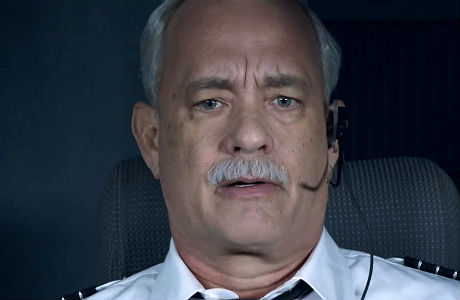
Sully falls a bit into this trap, but it is a true story about heroism that clearly speaks to Eastwood. Those moments when Capt. Chesley “Sully” Sullenberger must make some tough decisions as his airplane is failing him, and then making a near perfect landing on the Hudson River, saving everyone onboard — well, you’d be made of stone if it doesn’t get to you.

Tom Hanks is pretty amazing in the role, and every emotion imaginable plays on his face. Without his performance, Sully would sink because really, there isn’t a lot about what happened that lends itself to a whole movie. Besides the crash landing, there’s not much more. What the film tries to trump up is the aftermath, in which the National Transportation Safety Board questions Sully’s actions, on how he might have been able to land at nearby airports instead of risking a water landing. This is where Hanks saves it, as he plays this courageous man doubting what he did.

Overall, the conflict is minimal — there’s no substance abuse (like in Flight which handles the same topic far more compellingly), no family crisis, no secret agendas.  Sully — and his experienced, highly trained flight crew (including his co-pilot played by Aaron Eckhart) — just did their jobs. Calmly and as efficiently as humanly possible. Plus, we know how it all turns out: Sully remained the hero he should be. So, a whole movie? Probably not necessary, but Sully still manages to eke out some tears when it counts.

Listen to more of my thoughts on Sully along with When the Bough Breaks, in the ScreenPicks podcast below.
How to Interview: 9 Things to Know About “Ben-Hur”

Ben-Hur4

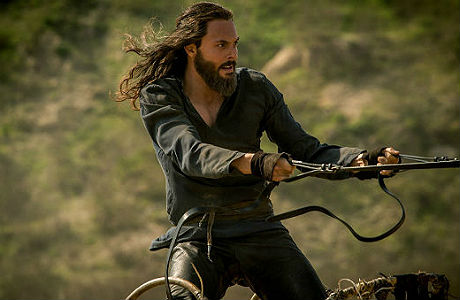
In the hands of director Timur Bekmambetov, this re-imagining of Ben-Hur is true epic action adventure wrapped up in a classic story of brotherly love, betrayal, forgiveness and finally redemption.

ScreenPicks talked with the men of the film – Jack Huston (Judah Ben-Hur), Toby Kebbell (Messala), Rodrigo Santoro (Jesus) and Morgan Freeman (Ilderim), and learned these nine things about making Ben-Hur.

On apprehension of doing another Ben-Hur:

Morgan Freeman: None! All the more reason to do it. It’s a re-imagining of a story that’s already been told three or four times. At least twice before in movies. I worked with Timur before. I know he’s very innovative when it comes to special effects and stuff like that. I couldn’t see how it was not going to be an exciting adventure.

On playing Judah Ben-Hur:

Jack Huston: I initially went after the role of Messala, which was interesting because I went and sat down with Timur and in my rather impassioned way spoke about Messala. Timur being Timur just sat and wrote everything down. Then later he said to me, when I’d gone out for a few auditions, “I think you might be right for Judah. I think you’re our Judah.” Then I went and tested and I somehow got the role. He said later to me, “The reason I felt that about you as Judah is not only did you feel like Judah to me but it was the way you spoke about Messala. You spoke about Messala with such love that he was never the bad guy to you.” He said, “For you two to have that relationship, it had to stem from real love between two brothers, and that’s how Judah felt about Messala.” Inadvertently, it was a beautiful way into the character, because the people who love you the most sometimes are the ones who hurt you the most. For this movie to work, that had to stay true, right to the very end. For the redemptive moment, for that last bit of forgiveness, you need to feel these brothers’ love. I was like, “Hah, Timur, you’re a smart dude. You got this. I feel good.” Continue reading How to Interview: 9 Things to Know About “Ben-Hur”

How to Interview: 6 Things About “Kubo and the Two Strings” from the Cast

Kubo3

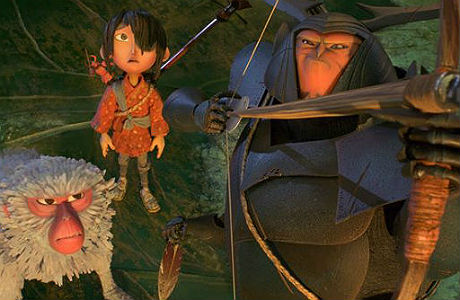
Laika Animation’s stop-motion technique is truly something to behold. With films like Coraline, ParaNorman and The Boxtrolls, you are amazed by the amount of effort it takes to make the movies, just as you instantly forget it as you get wrapped up in the storytelling.

Their latest efffort, Kubo and the Two Strings is no different, but is also the studio’s most ambitious and beautiful film to date, a lush feast for the eyes coupled with a story rich with culture. Laika’s CEO, Travis Knight, makes his directorial debut with the film, and it’s easy to see the passion he and his Laika team have poured into it.

Kubo and the Two Strings tells the story of a young Japanese boy named Kubo (Game of Thrones’ Art Parkinson), whose capacity for love and imagination has no bounds. He cares for his traumatized mother in a cave above the sea, but in the day, he goes to the local village to tell stories about his late father, a great warrior named Hounsou — stories his mother has told him. But it’s how Kubo tells these tales that keeps the village folk enthralled, using his magical musical instrument and origami to bring the characters to life.

Kubo, however, is soon confronted with his mysterious past, one his mother has tried to keep him safe from. Once unleashed, Kubo is forced to go on a quest, at his mother’s behest, to find his father’s magical armor in order to protect him and defeat a vengeful spirit wanting to take Kubo away forever. Along the way, Kubo finds quest companions, Monkey (Charlize Theron) and Beetle (Matthew McConaughey), who each protect and serve Kubo is strange ways.

Here are six things we learned from Knight, Theron and McConaughey about the magic of Kubo and the Two Strings – and the studio that created it. Continue reading How to Interview: 6 Things About “Kubo and the Two Strings” from the Cast